

Most people who dislike their nose dislike one specific thing about it.
A small bump along the bridge. A tip that drops slightly when they smile. A profile that reads straight from the front but not in photographs taken from the side. The concern is usually narrow and specific — and for many patients, it does not warrant surgery, general anesthesia, and a year of waiting for swelling to resolve.
A non-surgical nose job — also called liquid rhinoplasty or injectable rhinoplasty — uses dermal filler to smooth, straighten and balance the nose in a single appointment. For patients exploring a non-surgical nose job in Phoenix or Scottsdale, the goal is not a smaller nose. It’s a straighter, more balanced profile, achieved without surgery.

A non-surgical nose job is a treatment in which hyaluronic acid dermal filler is placed at precise points along the nose to change how its shape reads.
It works by adding, not removing. Filler placed above and below a dorsal bump creates a straight line along the bridge, so the bump no longer casts a shadow. Filler at the base of the columella lifts a drooping tip. Filler along one side of a slightly deviated bridge brings the profile back to center.
Non-surgical rhinoplasty can improve:
It cannot make the nose smaller. Filler adds volume, so a nose treated this way is very slightly larger overall — even though it usually reads as more refined, because a straight profile appears narrower than a bumpy one.
The main advantage is achieving a meaningful profile change in a single visit, with results visible before you leave.
The change is visible immediately, during the appointment.
Performed with topical numbing in an office setting, typically in 15 to 30 minutes.
Most patients return to work the same day. Mild swelling or bruising may last a few days.
Hyaluronic acid filler can be dissolved with hyaluronidase if complications occur.
Liquid rhinoplasty suits patients with a specific, contained concern about nasal shape rather than nasal size.
Non-surgical rhinoplasty is not a substitute for surgery, and there are situations where it is the wrong tool:

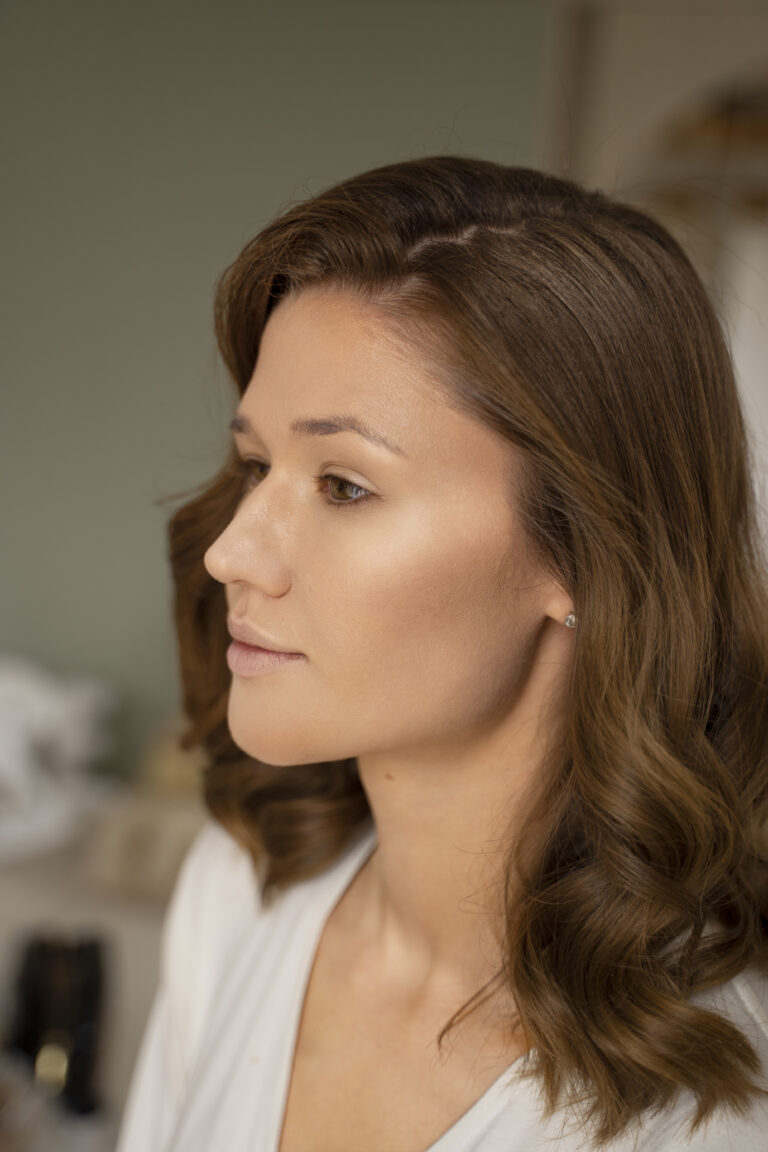
Filler can refine minor irregularities left after surgical rhinoplasty, and for some patients this is preferable to revision surgery.
However, previously operated noses carry higher risk, not lower. Surgery alters the blood supply and leaves scar tissue, which makes vascular complications both more likely and harder to manage.
This should be treated as a more complex case requiring a more experienced injector — not an easier one.
The nose is the least forgiving place on the face to inject. It has a dense, unforgiving blood supply and very little room for error, and it is the single most common site for serious filler complications. That is not a reason to avoid the treatment — it is a reason to be selective about who performs it, and to insist on reversible filler.
The appointment is short, but the assessment beforehand is what determines the result.
Your injector will examine the nose from front, profile and base, discuss which specific feature is bothering you, and confirm whether filler is capable of addressing it.
During the treatment:
Most treatments use between 0.5 and 1.0 mL of filler in total. Restraint matters more here than in almost any other injectable site — small volumes, placed correctly, produce better results than larger volumes.
Ciao Bella uses hyaluronic acid fillers only for nasal treatment.
This is a deliberate safety decision. Hyaluronic acid can be dissolved with hyaluronidase, which is the emergency treatment if filler compromises a blood vessel. Permanent and semi-permanent fillers cannot be reversed, and they are not appropriate for the nose.

There is no true recovery period, but there is a short settling period.
Mild swelling, redness at injection points, and occasional bruising. Avoid pressing on the nose, and avoid glasses that rest on a treated bridge.
Swelling resolves and the final shape becomes clear. Most patients consider the result settled by day seven.
A follow-up appointment allows for small refinements if needed. Additional filler is easier to add than to remove.
Results are visible immediately and last 9 to 18 months for most patients, depending on the filler used, the amount placed, and individual metabolism.
Filler in the nose often lasts longer than filler elsewhere in the face, because the area moves comparatively little.
Patients typically notice:
Maintaining the result requires repeat treatment. When treatment is discontinued, the nose gradually returns to its original shape — it does not worsen.


Contact the office immediately if you experience severe or increasing pain, blanching or dusky discoloration of the skin, or any change in vision after treatment. These are time-sensitive and treatable when addressed promptly.
Filler entering or compressing a blood vessel, which restricts blood flow to the overlying skin
Tissue loss resulting from untreated vascular occlusion
A rare but documented outcome when filler reaches the ophthalmic circulation
These outcomes are rare, but they are the reason this treatment should be performed by an experienced injector in a medical setting with hyaluronidase immediately available — not in a non-medical or mobile setting.
Risk is reduced by:
The cost of a non-surgical nose job in Phoenix typically ranges from $800 to $1,600 per treatment, depending on:
Because results last 9 to 18 months, this is best considered an ongoing cost rather than a one-time one. Over five years, repeat treatment can approach the cost of surgical rhinoplasty — a comparison worth making honestly during consultation rather than after.
Financing options are available through PatientFi®, Alphaeon®, and CareCredit®.
If you’re considering a non-surgical nose job in Phoenix or Scottsdale, the first step is confirming that filler can actually deliver what you’re picturing.
During your consultation, your injector will assess nasal structure and skin thickness, discuss what filler can and cannot change, and tell you directly if surgical rhinoplasty would serve you better.
Call (480) 245-5296 or request your consultation today.
Most patients see results lasting 9 to 18 months, depending on the filler used and how much was placed. Filler in the nose often lasts longer than filler elsewhere in the face because the area moves very little. Maintaining the result requires repeat treatment.
Most patients describe it as pressure rather than pain. Topical numbing cream is applied beforehand, and many fillers contain lidocaine. The treatment itself typically takes 15 to 30 minutes.
Most implants last 10–20 years, although replacement may be needed sooner.
No. Filler adds volume, so it cannot reduce nasal size. It changes how the nose reads by straightening the profile and improving balance — which often makes the nose appear more refined — but if your goal is a genuinely smaller nose, surgical rhinoplasty is the appropriate option.
It is generally safe when performed by an experienced injector in a medical setting, but the nose carries a higher risk of serious complications than other filler sites due to its blood supply. Rare complications include vascular occlusion, skin necrosis, and visual changes. Choosing a provider who uses reversible hyaluronic acid filler and keeps hyaluronidase on hand is the single most important safety factor.
Yes, when hyaluronic acid filler is used. Hyaluronidase dissolves the filler within a day or two. This is one of the main reasons Ciao Bella uses hyaluronic acid exclusively for nasal treatment and does not offer permanent fillers in this area.
Often yes, and it can be an effective alternative to revision surgery for minor irregularities. However, previously operated noses carry higher risk because surgery alters the blood supply and leaves scar tissue. It should be treated as a more complex case and discussed in detail at consultation.
Typically $800 to $1,600 per treatment, depending on how much filler is required and which product is used. A personalized estimate is provided at consultation.