




Key Takeaways
- Cosmetic surgery outcomes vary due to individual anatomy
- Healing responses differ from person to person
- Lifestyle and health influence recovery
- Expectations shape how results are perceived
- Education and support improve the patient experience
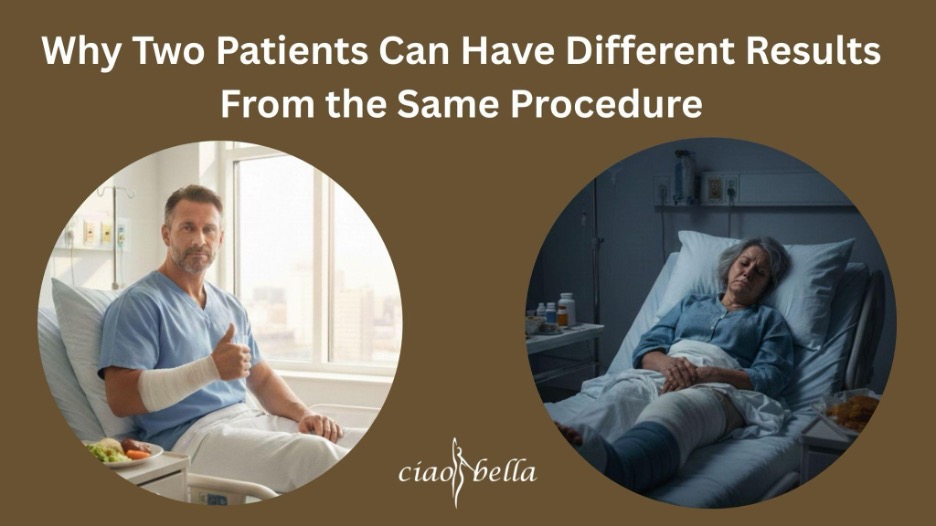
It is common for people to compare results when researching cosmetic procedures. Photos, testimonials, and recovery stories can all look reassuring, yet outcomes may still differ from one person to another. This often leads to an important question about why cosmetic surgery results vary, even when the same procedure is performed using similar techniques.
Cosmetic surgery is not a one-size-fits-all process. Each body responds differently, and results are shaped by more than the procedure itself. Understanding these differences helps patients develop realistic expectations and feel more confident throughout their treatment journey.
After reviewing patient experiences and educational resources from clinics such as Ciao Bella Cosmetic Surgery, it becomes clear that transparency, communication, and individualized care play a significant role in how patients understand and experience their results.
The Importance of Pre-Procedure Anatomy
Even before a procedure begins, two patients bring different physical characteristics to the table. Skin quality, underlying anatomy, and tissue elasticity all influence how the body responds to surgical changes.
Some people naturally have thicker skin, while others have more delicate tissue. Muscle tone, fat distribution, and bone structure also vary. These differences affect how surgical adjustments settle and how final contours appear.
Common Pre-Procedure Differences
- Skin thickness and elasticity
- Natural asymmetry in facial or body features
- Muscle tone and underlying structure
- Previous procedures or scars
These factors explain why outcomes are often different, even with aligned expectations.
The Role of Healing and Recovery
Healing is one of the most important factors in cosmetic surgery. Two patients may follow the same post-procedure instructions, yet their bodies still recover at different speeds and in different ways.
Understanding factors affecting cosmetic surgery outcomes often begins with recognizing how healing responses differ. Inflammation levels, circulation, and collagen production all influence how tissues adapt after surgery.
How Healing Differences Show Up
- Swelling may last longer for some individuals
- Scar tissue can mature at different rates
- Sensation changes may resolve sooner or later
- Final results may take varying amounts of time to appear
These variations are normal and to be expected; they do not indicate success or failure.
Health Factors That Impact Surgical Recovery
In addition to anatomy and healing, daily habits also play a significant role in influencing results. Nutrition, activity level, and general health affect how the body repairs itself after surgery.
Patients with strong circulation and consistent self-care habits often experience smoother recoveries. Others may need more time for tissues to settle. These individual healing differences after surgery help explain why timelines and outcomes vary.
Experience and Volume Influence Consistency
While individual variation is unavoidable, the care environment still matters. Clinics that perform a high volume of procedures often develop refined processes for patient education, recovery guidance, and follow-up care.
At Ciao Bella Cosmetic Surgery, focus is placed on clear communication, attentive support, and learning from a wide range of patient experiences. High procedural volume allows care teams to recognize patterns, anticipate concerns, and guide patients through recovery with practical insight.
Strong patient testimonials often reflect this consistency in support rather than identical visual outcomes.
Why Expectations Shape Satisfaction
Two patients can achieve technically successful results and still feel very differently about them. Expectations play a major role in how outcomes are perceived, especially during the early and middle stages of recovery.
For many people, this phase becomes less about comparing results and more about reflection. Questions such as is cosmetic surgery right for you often surface when individuals begin to understand how personal anatomy, healing timelines, and emotional readiness influence the overall experience.
Patients who understand why cosmetic surgery results vary tend to feel more at ease during recovery. Education helps people recognize progress rather than focusing solely on comparisons, allowing satisfaction to develop gradually alongside healing.
Helpful Expectation Guidelines
- Results evolve gradually, not instantly
- Early swelling does not reflect final outcomes
- Healing timelines are estimates, not deadlines
- Individual goals matter more than comparisons
When expectations are grounded in education, satisfaction often follows.
Comparing Outcomes Is Not Always Helpful
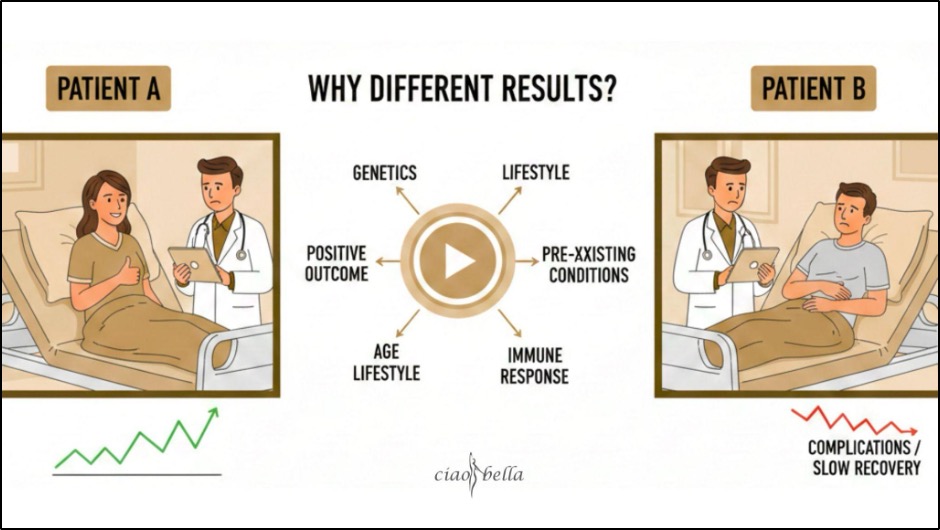
It is natural to compare before-and-after images, but direct comparisons can be misleading. No two bodies heal the same way, even when procedures are identical.
This is why educational consultations focus on individual goals rather than guarantees. Understanding what influences results allows patients to measure progress realistically.
A Look at Common Influencing Factors
The table below summarizes why outcomes differ, even with the same procedure:
Influencing Factor | How It Affects Results |
Anatomy | Determines structure and contours |
Healing response | Influences swelling and scar maturation |
Lifestyle habits | Affects tissue repair and recovery |
Expectations | Shapes satisfaction and perception |
Follow-up care | Supports smoother recovery |
Why Ongoing Support Makes a Difference
Post-procedure support helps patients navigate uncertainty during recovery. Clear instructions, accessible communication, and reassurance based on experience can reduce stress.
Clinics known for strong patient feedback, like Ciao Bella Cosmetic Surgery, often prioritize responsiveness and education. It helps patients feel supported, even when recovery does not follow a perfectly linear path.
Frequently Asked Questions
- Is it normal for two patients to heal differently after the same procedure?
Yes. Healing varies based on anatomy, circulation, and overall health.
- Does slower healing mean poorer results?
Not necessarily. Some bodies simply take longer to reach final outcomes.
- Can expectations affect satisfaction with results?
Yes. Realistic expectations often lead to greater comfort during recovery.
- Why do results continue to change for months?
Tissues remodel gradually as swelling resolves and collagen reorganizes.
- Should results be compared to others?
It is more helpful to focus on personal progress rather than comparisons.
Conclusion
Cosmetic surgery is a personalized process shaped by anatomy, healing, lifestyle, and expectations. Even when procedures are identical, outcomes naturally differ. Understanding these factors helps patients approach surgery with clarity rather than comparison.
At Ciao Bella Cosmetic Surgery, patient-focused care, strong testimonials, and extensive procedural experience support informed decision-making and realistic recovery journeys. When patients understand why results vary, they are better prepared to navigate healing with confidence and perspective.