




Breast surgery is often thought of as a one-time decision, but that is not always the reality. Over time, some patients consider further procedures to adjust or correct earlier results. This is where breast revision surgery complexity becomes an important topic to understand from the very beginning.
Unlike an initial augmentation, revision surgery involves working with tissues that have already been altered. Scar tissue, changes in anatomy, and prior healing patterns all influence how the procedure is planned and performed. Understanding these factors helps patients form realistic expectations and choose revision surgery with clarity rather than uncertainty.
At Ciao Bella Cosmetic Surgery, discussions around revision procedures often focus on education and transparency. By helping patients understand why revision surgery is more involved, the care team supports informed decision-making and long-term satisfaction.
Understanding the Difference Between Initial and Revision Surgery
Initial breast augmentation typically starts with untouched anatomy. Surgeons work with natural tissue planes, predictable skin elasticity, and consistent structural support. Revision surgery, however, requires navigating changes created by the first procedure.
Key differences include:
- Existing implants or implant pockets
- Scar tissue that formed during healing
- Changes in skin stretch or firmness
- Altered positioning of breast tissue
These differences explain why planning a revision requires a deeper evaluation process compared to an initial augmentation.
The Importance of Implant Knowledge in Revision Planning
A key part of revision surgery involves recognizing how implants behave over time. Materials, placement, and how the body responds all influence long-term outcomes. This is why understanding breast implants is an essential part of planning any revision procedure. Implants may shift, settle, or interact with surrounding tissue differently as years pass, which can affect symmetry and comfort.
When patients understand how implants integrate with natural tissue, they are better prepared for conversations about possible adjustments. Clinics with significant experience often assist patients in calmly understanding these changes, prioritizing education over urgency.
Why Revision Surgery Requires More Detailed Planning
One of the main reasons breast revision surgery complexity is higher lies in the planning stage. Each revision case is unique, even when the original procedures appear similar on paper.
Revision planning often involves:
- Evaluating how previous implants affected tissue
- Assessing scar tissue formation and placement
- Reviewing changes in breast shape over time
- Aligning expectations with what is realistically achievable
Because of these factors, revision surgery cannot adhere to a standard template. It must be customized carefully for each individual.
Clinics that perform a high volume of procedures tend to recognize subtle patterns that influence outcomes. This experience allows teams to guide patients with clarity rather than assumptions.
Key Differences Between Initial and Revision Procedures
Many patients are surprised to learn how different revision surgery is from an initial procedure. The contrast becomes clearer when comparing both approaches side by side.
Aspect | Primary Augmentation | Revision Surgery |
Starting anatomy | Untouched tissue | Previously altered tissue |
Scar tissue | Minimal or none | Often present |
Implant pocket | Newly created | May need adjustment |
Predictability | More consistent | Highly variable |
Planning depth | Standard evaluation | Detailed and individualized |
This comparison highlights breast revision vs primary augmentation and why revision procedures require a more careful approach.
How Previous Surgical Goals Shape Revision Decisions
The goals of an initial procedure often influence how revision surgery is approached later. During a first breast augmentation, decisions are generally made around size, placement, and proportion based on untouched anatomy. Over time, personal preferences, body changes, or healing responses may lead patients to reassess those earlier choices.
Revision surgery considers how the original goals align with the body’s current structure. Surgeons must adapt to existing conditions instead of starting over. Revision procedures require careful evaluation and patience, especially when matching current expectations with past surgical outcomes.
The Role of Scar Tissue and Healing Patterns
Scar tissue is one of the most significant factors in revision surgery. After an initial procedure, the body forms scar tissue as part of natural healing. In some cases, this tissue can tighten, shift, or affect implant position.
Scar-related considerations include:
- Tissue firmness around implants
- Changes in breast symmetry
- Limited flexibility of existing tissue
- Variations in healing response
Understanding these patterns helps explain why breast revision is more complex and why results depend heavily on prior healing rather than just surgical technique.
How Experience Shapes Revision Outcomes
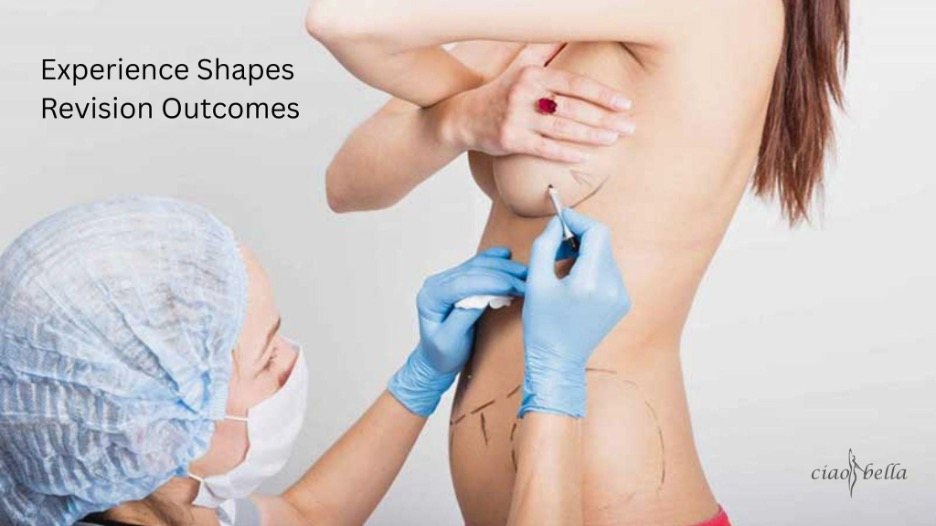 Revision surgery benefits greatly from experience and repetition. Practices that regularly perform complex procedures develop insight into how different bodies respond over time.
At Ciao Bella Cosmetic Surgery, patient testimonials often highlight feelings heard and supported during revision discussions. This reflects an approach that values listening, thorough evaluation, and realistic guidance rather than rushing decisions.
Experience supports:
- Better identification of underlying issues
- More precise surgical adjustments
- Clear communication around limitations
- Stronger alignment between expectations and outcomes
This patient-focused care model helps reduce uncertainty during what can be an emotionally complex decision.
Managing Expectations in Revision Surgery
One of the most important aspects of revision surgery is expectation alignment. Unlike an initial procedure, revision goals may involve correction rather than transformation.
Patients often benefit from understanding:
- What changes are achievable versus limited
- How prior surgery influences current results
- Why symmetry improvements may be gradual
- How healing timelines can differ
Clear communication plays a central role here. Patients who feel informed are more comfortable navigating the revision process with patience.
Recovery Considerations in Revision Procedures
Recovery after revision surgery can differ from initial augmentation. The body may respond differently due to existing scar tissue and prior healing patterns.
Common recovery observations include:
- Gradual tissue settling over time
- Variations in swelling compared to the first surgery
- Longer adjustment periods in some cases
- The need for close follow-up and guidance
Practices with strong post-procedure support often help patients interpret these changes accurately, reducing unnecessary concern.
Why Patient-Centered Care Matters More in Revisions
Revision surgery is not only technically complex but also emotionally layered. Patients may come in with concerns, frustrations, or uncertainty based on previous experiences.
A patient-centered approach focuses on:
- Active listening
- Honest discussion of options
- Transparent explanation of risks and limitations
- Ongoing support throughout recovery
At Ciao Bella Cosmetic Surgery, this approach is reflected in strong patient feedback and consistent follow-up care, helping individuals feel guided rather than confused.
Key Takeaways
- Breast revision surgery is more complex due to altered anatomy
- Scar tissue and prior healing influence surgical planning
- Revision procedures require individualized approaches
- Experience improves predictability and communication
- Patient education supports confidence and satisfaction
Conclusion
Breast revision surgery involves far more than repeating an initial procedure. The presence of scar tissue, changes in anatomy, and unique healing responses all contribute to increased complexity. Understanding these factors helps patients approach revision surgery with realistic expectations and clarity.
Clinics that prioritize education, experience, and patient-focused care play a crucial role in supporting successful outcomes. At Ciao Bella Cosmetic Surgery, communication, high procedural volume, and attentive follow-up empower patients to approach revision surgery with confidence and understanding for the long term.
Dr. Edgardo Zavala

Dr. Edgardo Zavala is the founder and medical director of Ciao Bella Cosmetic Surgery & Vein Clinic in Chandler, AZ. Board-certified in internal medicine with advanced fellowship training in cosmetic surgery, cardiology, and vascular medicine, he brings more than 40 years of medical experience to cosmetic surgery, body contouring, and vein treatments.